Cranial Technologies

How to Check for Ear Deformities

What are Some Common Ear Shape Differences?

This assessment will guide you through the most common types of infant ear shape deformities— what they look like and why early evaluation matters. Many ear shape deformities can be gently corrected with non-surgical care when treated at 3 weeks of age.

Prominent Ear

When one or both ears stick out more than usual from the side of the head. (The most common infant ear deformity)

Lop / Lidding Ear

The upper part of the ear folds over or down, sometimes making the ear appear soft or bent. (Presents in over 25% of all infant ear deformities)

Mixed Types

Many babies have a combination of conditions — such as lidding with conchal crus, or prominent with Stahl’s

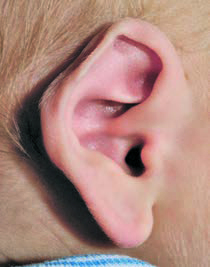
Stahl's Ear

An extra fold gives the ear a pointed or angular appearance.

Helical Rim

Flattening or folding along the outer rim of the ear that changes its natural curve

Conchal Crus

A ridge of cartilage crosses the center of the ear, making it appear visually divided.

Top 5 Signs Your Baby May Have Newborn Ear Deformities

Sign 1. Prominent Ears

Prominent (or protruding) ears are diagnosed when the ears extend over 2 centimeters (about ¾”) from the skull. Ears that stick out are frequently caused by missing natural folds or underdeveloped ear cartilage.

  • Noticeable projection from the skull
  • Visible from the front
  • Symmetrical or asymmetrical

Sign 2. Abnormal Ear Shapes or Folds

Uneven shapes in one or both ears can indicate newborn ear deformities. Common types include:

  • Stahl’s Ear: Pointy or elf-like fold at the top
  • Lop Ear: Top portion folds forward and downward
  • Cupped or Tight Ear: Outer edge is curled or tight

Sign 3. Asymmetry Between Ears

When one ear differs from the other in size, shape, or folding, this asymmetry is a sign of ear deformities that may require early intervention.

Sign 4. Birth Positioning Deformity or Flatness

Babies may develop flattened, crinkled, bent, or inward-pressed ears due to their position in the womb or post-birth. Such flattening is another common ear deformity that can be corrected with early molding.

Sign 5. Absence of Ridges or Folds

If the upper ear lacks definition, particularly the antihelical fold, it may indicate an underlying ear deformity.

What to Keep in Mind After Spotting Ear Deformities

  • Stay calm: Almost all newborn ear deformities can be naturally reshaped with EarWell®
  • Release guilt: It’s highly unlikely you caused your baby’s ear deformity.
  • Know the facts about hearing: Most external ear deformities do not impact hearing.
  • Act early: Early evaluation is crucial. Schedule a no-cost evaluation within the first 3 weeks after birth.
  • Check coverage: Most EarWell® treatments for ear deformities are covered by insurance, and our dedicated insurance team can help guide you through the process.

Will Newborn Ear Deformities Self-Correct?

Only 30% of ear deformities correct on their own—and there’s no way to know which will. Early treatment helps ensure the most natural result and may prevent surgery later.

Ear shape concerns? We can help.
Get a No-Cost Evaluation